Decision Wheel Maker Online Free - Spin to Decide
Make Decisions Easy and Fun with Our Free Decision Wheel

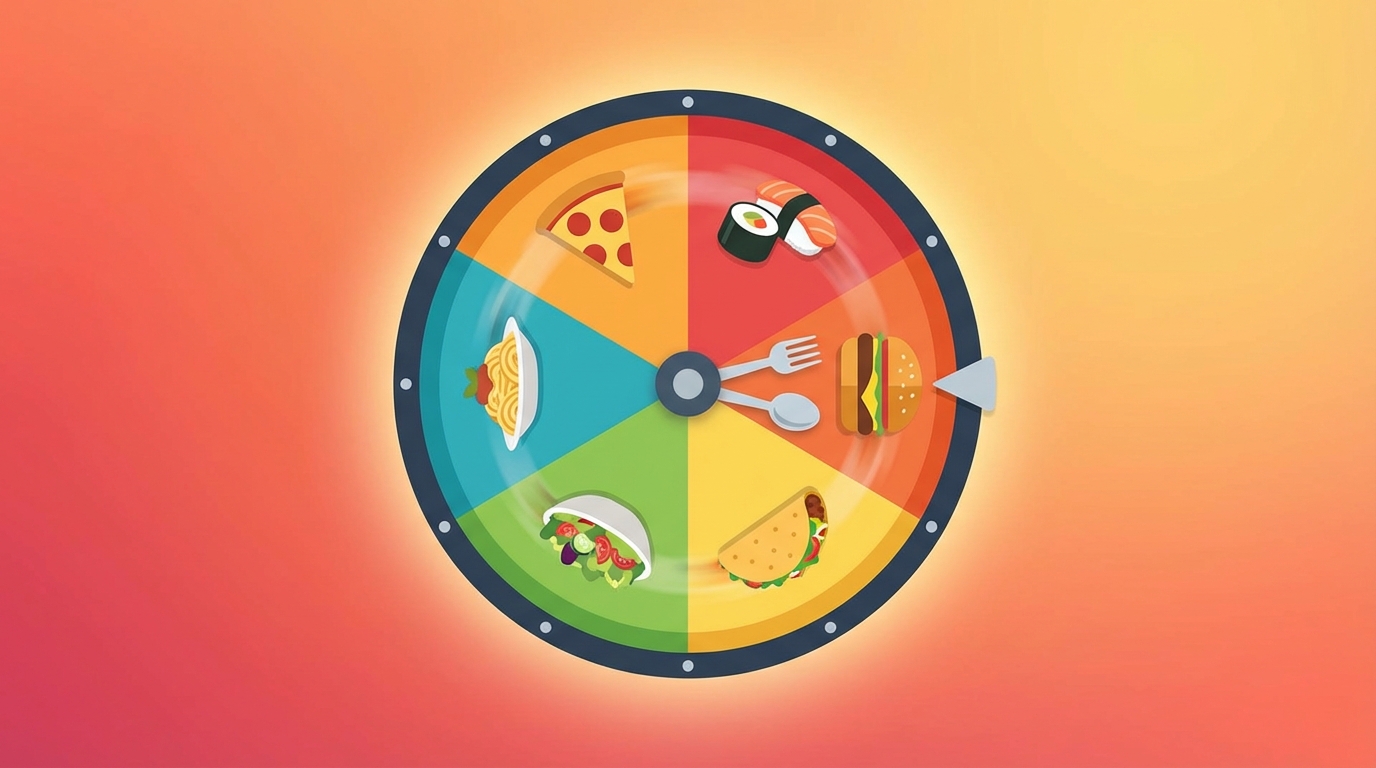
You stand at the open fridge for the third time tonight, scanning shelves you already memorized. Dinner is not hard. Choosing dinner is hard. That small stuck feeling is what the **decision wheel maker** was built to fix. You type the options you are weighing, you spin, and a random pointer lands on one of them. The stuck feeling lifts in about four seconds. Think of it as a coin flip with more than two sides. A coin handles yes or no. A wheel handles pizza versus sushi versus leftovers versus that new ramen place, all at once, each slice getting a fair share of the circle. And because you build the wheel yourself, every option on it is one you already decided you could live with. This guide walks through how to make your own wheel, why the brain gets stuck on tiny choices in the first place, how to weight options when they are not all equal, and the line between letting chance decide and keeping the decision in your own hands. No signup. No cost. It runs on whatever device you are reading this on.
What a Decision Wheel Actually Is
The quiet part doing the real work is the randomness underneath. wheel.expert picks the landing slice using the **Web Crypto API**, the browser's built-in cryptographically secure random number generator. That is the same class of randomness trusted to generate encryption keys, not the loose, predictable kind a basic shuffle produces. In practice it means the wheel has no memory and no lean. The slice that came up last spin has the exact same odds this spin. Nobody is nudging the result, including us.
What makes a wheel different from a coin or a hat full of folded paper is that you watch it happen. The build-up of the spin slowing down gives the result a small sense of occasion, and that occasion is part of why people accept the answer instead of arguing with it.
Build Your Own Custom Decision Wheel
- Type your first option into the input box and press Enter. The slice appears on the wheel right away so you can see it take shape.
- Keep adding until every real option is on there. Pasting a comma-separated or line-separated list drops them all in at once, which beats typing one by one.
- Recolor slices, switch the spin sound on or off, or turn on confetti if you want the result to feel like a small event.
- Hit the spin button, wait out the slowdown, and read where the pointer lands. Save the wheel to a bookmarkable link if it is one you will reuse.
Why Your Brain Freezes on Small Choices
Decision fatigue
Analysis paralysis and the paradox of choice
The gut-check trick
Borrowed permission to commit
Weighting Options When They Are Not Equal
The method is simple: add an option more than once. Put 'Pizza' on three times and 'Sushi' on once, and pizza now owns three of the four slices, roughly a 75 percent chance. The wheel is still random and still cryptographically fair across the slices it has. You have just stacked the deck the way an honest gambler would, openly and on purpose.
This turns the wheel from a pure coin flip into something closer to a vote. Heavily favored option, several slices. Long shot you would still accept, one slice. The result respects your preferences without forcing you to defend them out loud. If you want the same logic for picking people or teams rather than dinners, the name picker tool handles weighted name draws the same way, and the guide to fair team generators goes deeper on splitting groups without anyone crying foul.
When to Let Chance Decide, and When Not To
Good for the wheel: low stakes, options you already vetted
Not for the wheel: anything you would regret losing
The honest middle: the wheel as a thought experiment
Real Use Cases, From Trivial to Genuinely Useful
Life admin and the daily grind
Breaking ties in a group
Choices big and small, framed responsibly
Games, parties, and the classroom
Getting More Out of Your Wheel
Honor the first spin
Only load options you would genuinely accept
Keep reusable wheels and save them
Conclusion
Most of the choices that stall you out do not actually matter, and some quiet part of you knows it. That is exactly the gap a decision wheel fills. It is a fast, fair, cryptographically random way to settle the dozen tiny standoffs a day that drain you for no reward, so the real thinking is left for the choices that have earned it. Build a wheel for the next thing you are circling. Load only options you could live with, spin once, and watch your own gut react while it slows down. Either you accept the slice and move on, or you notice you were rooting for a different one and you have your answer anyway. Both outcomes beat standing at the fridge. Want to keep going once you have the hang of it? The <a href="/blog/yes-no-wheel-decisions/">yes or no decision guide</a> covers the two-option version, and the <a href="/blog/how-to-use-spin-wheel/">complete spin wheel walkthrough</a> shows every customization in one place. So what is the first thing you will let the wheel decide?
Try the Decision Wheel Now!
Start SpinningFrequently Asked Questions
How do I build my own custom decision wheel?
Type each option into the input box and press Enter, and the slice appears on the wheel instantly. Keep adding until every choice you are weighing is on there, then spin. You can paste a comma-separated or line-separated list to add many options at once, which is much faster than typing them individually.
Is the decision wheel actually random or is it rigged?
It is genuinely random. The landing slice is chosen using the Web Crypto API, the browser's cryptographically secure random number generator, so every slice has an exactly equal chance every spin. The wheel has no memory of past results and nobody can bias it, including us.
Can I make some options more likely than others?
Yes, and the trick is simple: add the favored option more than once. Put a choice on three slices and a rival on one, and the favored one now has roughly a 75 percent chance. Each slice is still treated fairly. You have just given some options more slices than others.
Should I use a decision wheel for big life decisions?
No, and that is by design. The wheel is built for low-stakes choices where you would accept any outcome, like dinner or which movie to watch. For things you could regret losing, like a job or a relationship, use real research and your own values. The wheel can still help as a thought experiment by showing you which result you were quietly hoping for.
What is the gut-check trick people mention?
Spin the wheel, then watch your own reaction in the moment before it stops. If you catch yourself silently rooting for one slice, that feeling is your real preference surfacing. You can act on the gut reaction instead of the wheel's actual result. Used this way, the wheel is a mirror for what you already want.
How many options can I put on the wheel?
Anywhere from 2 to well over 100. For the cleanest visual and easiest reading we suggest staying under about 20 slices, but the wheel handles big lists fine when you need them.
Can I save a wheel and reuse it later?
Yes. Save any wheel to generate a unique link you can bookmark or share. A saved dinner wheel or chore wheel turns a recurring decision into a single click, and anyone you send the link to gets your exact configuration.
Does it work on my phone, and does it cost anything?
It works on any phone, tablet, or computer with no app to install, and it is completely free with unlimited spins and no signup. The first load needs an internet connection, after which spinning keeps working even if your connection drops.